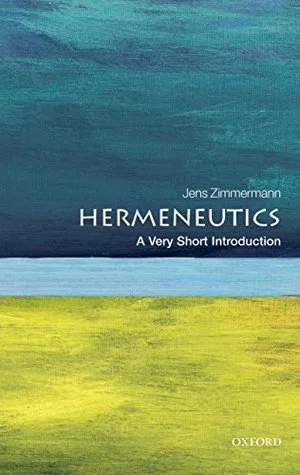
Chapter 1: What is hermeneutics? According to Zimmermann, a simple answer to the question is that "it means interpretation" (p.1). "Interpretation occurs in many fields of study and also day-to-day life. We interpret plays, novels, abstract art, music and movies, employment contracts, the law, the Bible, the Quran, and other sacred texts; but we also... Continue Reading →
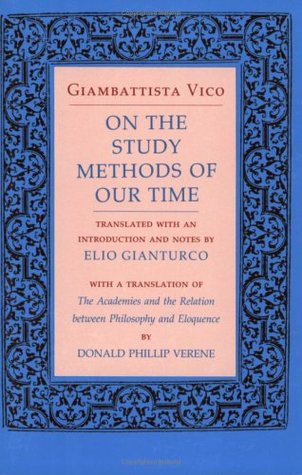
Book Summary: On the Study Methods of Our Time / Giambattista Vico
I According to Vico, “the men of the modern age, have discovered many things of which the Ancients were entirely ignorant; the Ancients, on the other hand, knew much still unknown to us” (p.4). And pursues the question ‘which study method is finer and better, ours or the Ancients?’ while describing his goal as “to... Continue Reading →
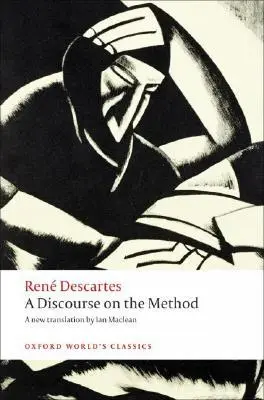
Book Summary: A Discourse on the Method / René Descartes
Part One Descartes states that every man is equally equipped with “good sense”, which is the faculty of judgement that leads one to wisdom. However, “it is not enough to possess a good mind; the most important thing is to apply it correctly” (p.2). Although each person may be equal in possessing the same forms... Continue Reading →
The Modern Ego
One bizarre property of the modern ego is the reality that it deceives itself regarding the nature of knowledge. People think it is certain that the people of the past actually knew nothing. According to the opinion of such people, the people of the past simply complied with the wrong ideas of prophets and guides.... Continue Reading →
Objectivity, A Double-Edged Sword
Stephen Gaukroger writes in his book Objectivity: A Very Short Introduction: "If we perform an experiment or carry out an observation, we usually have a good idea of what kind of result we will get. Sometimes we get unexpected results, and, when we are testing a theory, these results may contradict what the theory predicts... Continue Reading →
Modern Science Has No Soul?
Nathan Sivin, who studies history and technology in China, writes: "Ernst Geller has pointed out a particular way in which the European Scientific Revolution is more than a leap to a new form of knowing. It is natural to assume that in science the crucial test has always been "is it true?" But earlier that... Continue Reading →
This is not yet a scientific age…
Delighted to have been introduced to this fascinating piece of writing by Richard Feynman (The Value of Science). What a beautiful mind... Makes one really wonder if so-called the "objectivity" of science indeed reduces the dimensions we can see the nature wrapped in and acts as a curtain between the most majestic masterpiece and the... Continue Reading →