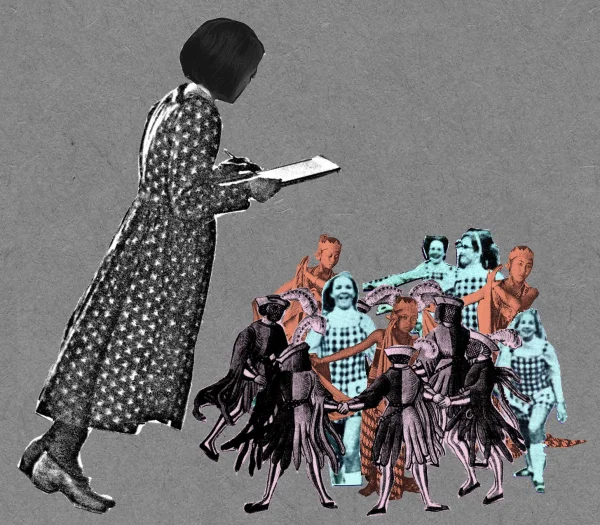
Anthropology, as a discipline, has been concerned with the very lives of people—focusing on how different people experience and interpret the world, which many other disciplines in the social sciences have been attentive to as well. Nevertheless, the most remarkable trait that has distinguished anthropologists from scholars of other fields has been the participant-observation method that they... Continue Reading →
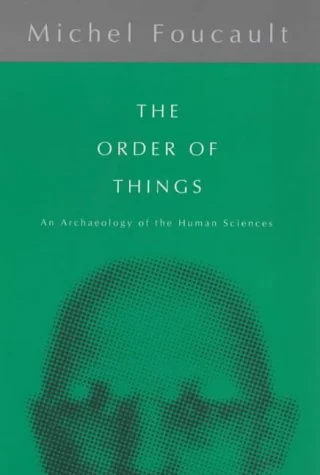
Book Summary: The Order of Things: The Archaeology of the Human Sciences / Michel Foucault
Preface Foucault’s inspiration of writing the book originated from a joke by Borges, who provided various definitions from a ‘certain Chinese encyclopaedia’ that divided animals into categories such as belonging to the Emperor, embalmed, tame, sucking pigs, sirens, drawn with a very fine camelhair brush, that from a long way off look like flies… Having... Continue Reading →
Anthropology and ‘Southeast Asia’: Can the Region Be a Field?
Introduction If one is to investigate the academic circles today, s/he can soon realize that every academic field is being divided into further specializations and each researcher is asked to narrow down their focus and to do a more meticulous study. This is something which I have personally become conscious of as an anthropology student—seeing that a major difference between... Continue Reading →
Morality—a Social Essential?
“Nothing is true, everything is permitted” was supposedly the last words of the founder of a 12th-century Persian assassin group called Hashashin. It is a quote that has inspired thinkers like Nietzsche to include it in his work and regard it as the freedom of the spirit (1989). Although such a way of thinking argues that a “truly free individual” would not conform to social moral obligations due to a supposed contradiction between one’s “true... Continue Reading →
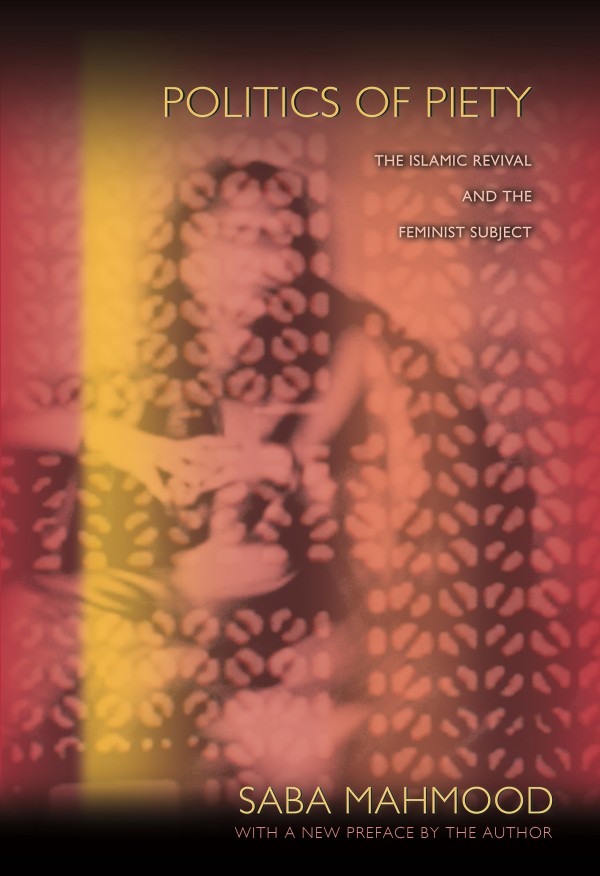
Book Review: Politics of Piety / Saba Mahmood
Mahmood, S. (2012). Politics of piety: the islamic revival and the feminist subject. Princeton: Princeton University Press. This thought-provoking yet complicated book is a groundbreaking analysis of the complex relationship between religious practices and beliefs of (some) Muslim women and modern secular liberal discourses on feminism and other issues. The ethnography, published in 2004 by... Continue Reading →
Enlightenment, the Rediscovery of Rationality?
A common way of describing the Enlightenment period centers around the discourse of “rationalization”. It is assumed that it is by abolishing the orders of the Church that the individuals empowered themselves via exercising their reason and purging the bigotry that was accumulated throughout the Dark Ages of Europe. For such reasons, when one speaks... Continue Reading →
Can the Secular Speak of Human Economic Activity?
If we are to investigate discourses of economics brought by people of varying intellectual backgrounds such as anthropology, sociology, history, and economics, we can see how some thinkers have looked into structures, some have investigated morality, some have examined cultures, and some have examined pure numbers. After having an (superficial) exposure to such different views on a very human aspect of... Continue Reading →
Wittgenstein, Culture, and Value: The Disappearance of a Culture
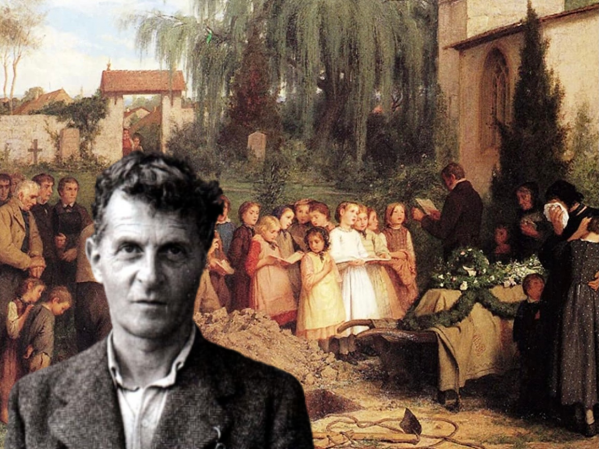
One of Wittgenstein's personal notes, taken from the book Culture and Value, states: "I realize then that the disappearance of a culture does not signify the disappearance of human value, but simply of certain means of expressing this value, yet the fact remains that I have no sympathy for the current of European civilization and... Continue Reading →
Dubious Sites of Vague Human Activity: Internal and External Goods… A Modern Paradox
In the previous post of this series, we entered into the office and made a distinction between "peculiar" and "out of context" occupations. We defined "peculiar" jobs as those that are particularly useful to and designed for the site that it works for, such as a curator or an archivist. On the other hand, we... Continue Reading →
Dubious Sites of Vague Human Activity: Office Labor without Intrinsic Good?
Previously in this series, we entered into one of the most common workplaces: the office. And in this post, I will touch on the purposelessness of many occupations that are bounded by this site. As I had mentioned before, my examples are derived from an office atmosphere that was observed during an internship in a... Continue Reading →