We all know that phrases such as “Artificial Intelligence”, “Machine Learning” and “Data Science” have become buzzwords thrown in every corner. Surely today is the era of Artificial Intelligence with the emergence of Big Data and with the leap in computation power. Perhaps, we are going through a revolution, a technical revolution, that will be... Continue Reading →
Reflection on a Minor Field-trip to Chungking Mansions, Hong Kong
(Originally written in November 6, 2019) Chunking Mansions... A place so crowded yet so lonely in middle of Tsim Tsa Tsui. It is crowded because a lot of people from South Asia and Africa, whether Hong Kong citizens, asylum seekers or illegal workers, strive to make a living. It is lonely because it is, in... Continue Reading →
Art and Structural Violence: A Reflection on ‘The Act of Killing’
Foucault states that power’s success is proportional to its ability to hide its own mechanisms (1978: 86). But what happens when power, acquired with means of violence, not only hides itself but is applauded by masses? What if violence becomes a trait of an identity that is celebrated? The documentary ‘The Act of Killing’ precisely... Continue Reading →
Fear Opposed to Illusive Power
When the two words ‘fear’ and ‘love’ come together in a sentence, it often causes ambiguity as such feelings are at times intertwined with each other. Do people fear God because they are afraid of losing his love? Do people love their parents due to their strict guidance of their kids’ lives? Such vagueness and... Continue Reading →
Book Review: Political Leadership among Swat Pathans / Fredrik Barth
Barth, Fredrik. Political Leadership among Swat Pathans. 1st Pbk. Ed. with Corrections ed. London: Athlone, 1965. Print. Monographs on Social Anthropology ; No. 19. This fascinating yet terrifyingly complex ethnography, published in 1959, is about the Pashto-speaking people (Pathans) of the Pakistan-Afghanistan border area called Swat. Fredrik Barth claims the main purpose of his study... Continue Reading →
Japan and Power: Kawaii is Power!
Scholars since the late 20th century have been much interested with the concept of kawaii. We have come to a point in which the term is not only attractive to scholars of Japanese Studies but most people around the world, who have inevitably been in contact with products that inhabit the concept. But what exactly... Continue Reading →
Japan and Power: A Perfect Fit for Modernity
Japan, an imperial power in history, has gone through various transformations in many areas such as economics, politics, consumerism, popular culture etc. And such transformations have surely changed Japan’s influence in the world after World War Two. Among the areas of vast transformations and novelties that Japan has gone through, I am particularly interested in... Continue Reading →
Japan and Power: Soft Power in Becoming a Superpower
It has become widely accepted that, day by day, national borders are being erased in the world. With globalization, some local cultures, practices and commodities have become known worldwide to become an ingredient contributing to the so-called ‘global culture’. And with the contribution of ‘kawaii’ culture of Japan (be it in music, cartoons, or video... Continue Reading →
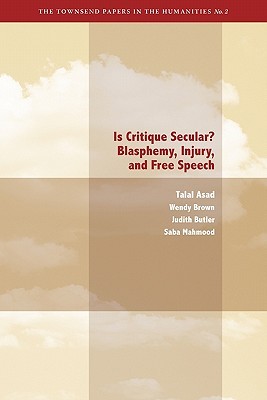
Is Critique Secular?: Blasphemy, Injury, and Free Speech / Talal Asad, Wendy Brown, Judith Butler, Saba Mahmood
The recent European discourse on blasphemy as applied to the behavior of Muslim immigrants in Europe serves, paradoxically, at once to confirm and to deny difference. Angry Muslim responses to the publication of the Danish cartoons are seen by secularists as attempting to reintroduce a category that was once a mea ms of oppression in... Continue Reading →
Concepts in Linguistic Anthropology: Linguistic Relativity and Nationalism
Eve Haque states that the two most recurrent schools of thought on nationalism in conventional scholarship is primordialism and modernism. While describing primordialism, she mentions how language is a central element around which the nation is organized. Johann Gottfried Herder is presented as linking the ideas of reason and language by stating how each nation... Continue Reading →