Given how all thought systems, aesthetic judgments, or moral frameworks are deeply embedded in the flow of the lived world, human experience becomes the ultimate source of value and meaning and a broker of what is perceived as reality. Such significance then calls into question the limits and dynamics of...
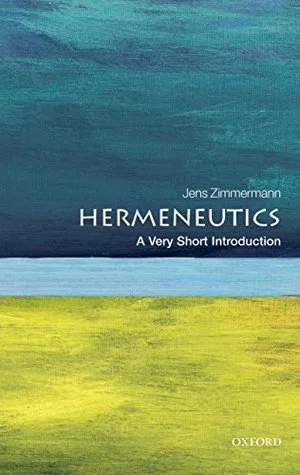
Book Summary: Hermeneutics: A Very Short Introduction / Jens Zimmermann
Chapter 1: What is hermeneutics? According to Zimmermann, a simple answer to the question is that "it means interpretation" (p.1). "Interpretation occurs in many fields of study and also day-to-day life. We interpret plays, novels, abstract art, music and movies, employment contracts, the law, the Bible, the Quran, and other sacred texts; but we also... Continue Reading →
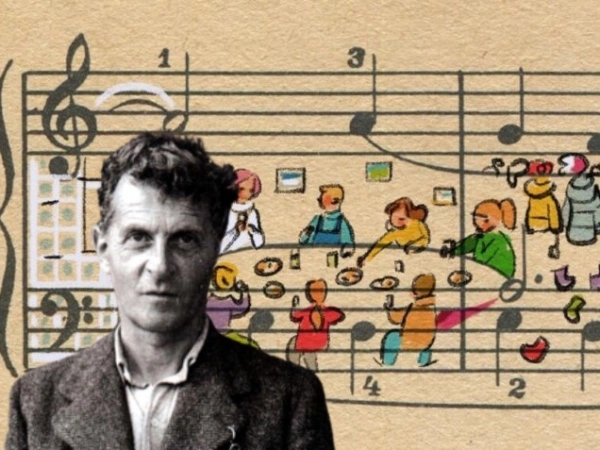
Wittgenstein, Culture, and Value: Language-games and Forms of Life
According to Wittgenstein, examples of language are meaningful only in the context that they are uttered in — that is, according to the “rule” of the “game” being played. As a very simple example, the utterance “Fire!” could be an order, an answer to a question, an instant reaction, or some other forms of communication.... Continue Reading →
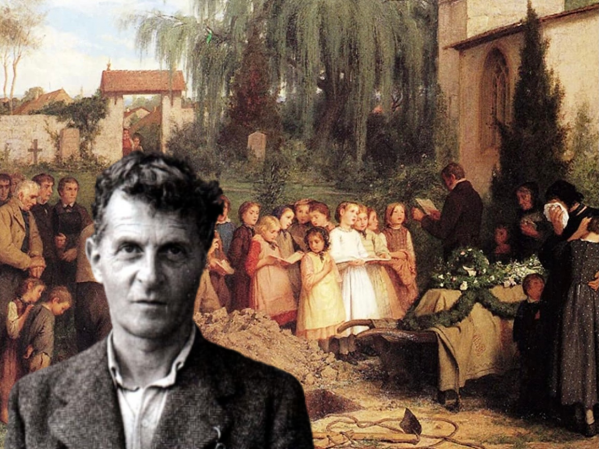
Wittgenstein, Culture, and Value: The Disappearance of a Culture
One of Wittgenstein's personal notes, taken from the book Culture and Value, states: "I realize then that the disappearance of a culture does not signify the disappearance of human value, but simply of certain means of expressing this value, yet the fact remains that I have no sympathy for the current of European civilization and... Continue Reading →
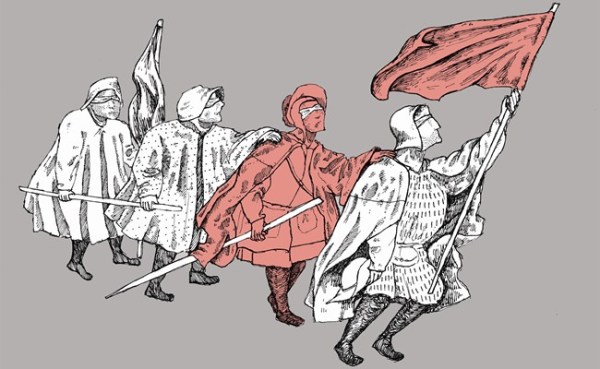
Wittgenstein, Culture, and Value: “Whereof one cannot speak, thereof one must be silent.”
In his work called Tractatus Logico-Philosophicus, Wittgenstein ends his book with the stunning phrase: "Whereof one cannot speak, thereof one must be silent". Although this phrase of his has deeply affected me and my thinking, it is quite ironic that what I am doing right now contradicts with the literal meaning of the phrase, that... Continue Reading →
Concepts in Linguistic Anthropology: Linguistic Relativity and Nationalism
Eve Haque states that the two most recurrent schools of thought on nationalism in conventional scholarship is primordialism and modernism. While describing primordialism, she mentions how language is a central element around which the nation is organized. Johann Gottfried Herder is presented as linking the ideas of reason and language by stating how each nation... Continue Reading →
Concepts in Linguistic Anthropology: Medium of Interaction and Media Ideology
In her article, Tracy LeBlanc-Wories describes presents debates on whether technology, the medium of interaction, affect communication (2015). She states that scholars before the 1990s mostly neglected the potential community aspects of the internet. In later periods, Leblanc-Wories explains how research projects of Malcolm R. Parks and Kory Floyd not only argued how people use... Continue Reading →
Concepts in Linguistic Anthropology: Language Socialization and Color Categorization
Amy L. Paugh states that language socialization research looks into how children and other novices are socialized via language, and how they socialize with others, as they learn to use languages through interactions with relatives and friends (2015, 125). Paugh further states that the study of language socialization consists of two interdependent developmental processes. The... Continue Reading →
Concepts in Linguistic Anthropology: Language Ideology and New Chinglish
Paul V. Kroskrity defines “language ideologies” as the “beliefs, feelings, and conceptions about language structure and use, which often index the political-economic interests of individual speakers, ethnic and other interest groups, and the nation-state." (2015, 95) In other words, language ideologies are our beliefs about languages and their users. To further elaborate, it is through... Continue Reading →
Concepts in Linguistic Anthropology: Community of Practice and Swearwords
The concept of ‘community of practice’ was first introduced to language and gender research by Penelope Eckert and Sally McConnel-Ginet (Pichler 2015, 196) who define it as “an aggregate of people who come together around mutual engagement in an endeavor. Ways of doing things, ways of talking, beliefs, values, power relations - in short, practices... Continue Reading →