I According to Vico, “the men of the modern age, have discovered many things of which the Ancients were entirely ignorant; the Ancients, on the other hand, knew much still unknown to us” (p.4). And pursues the question ‘which study method is finer and better, ours or the Ancients?’ while describing his goal as “to... Continue Reading →
Book Summary: A Discourse on the Method / René Descartes
Part One Descartes states that every man is equally equipped with “good sense”, which is the faculty of judgement that leads one to wisdom. However, “it is not enough to possess a good mind; the most important thing is to apply it correctly” (p.2). Although each person may be equal in possessing the same forms... Continue Reading →
Book Summary: Theory of the Partisan: Intermediate Commentary on the Concept of the Political / Carl Schmitt
Introduction View of the Initial Situation 1808-13 Schmitt writes, “the initial situation for our consideration of the problem of the partisan is the guerrilla war that the Spanish people waged against the army of a foreign conqueror from 1808 until 1813. In this war, a people—a pre-bourgeois, pre-industrial, pre-conventional nation—for the first time confronted a... Continue Reading →
Book Summary: The Order of Things: The Archaeology of the Human Sciences / Michel Foucault
Preface Foucault’s inspiration of writing the book originated from a joke by Borges, who provided various definitions from a ‘certain Chinese encyclopaedia’ that divided animals into categories such as belonging to the Emperor, embalmed, tame, sucking pigs, sirens, drawn with a very fine camelhair brush, that from a long way off look like flies… Having... Continue Reading →
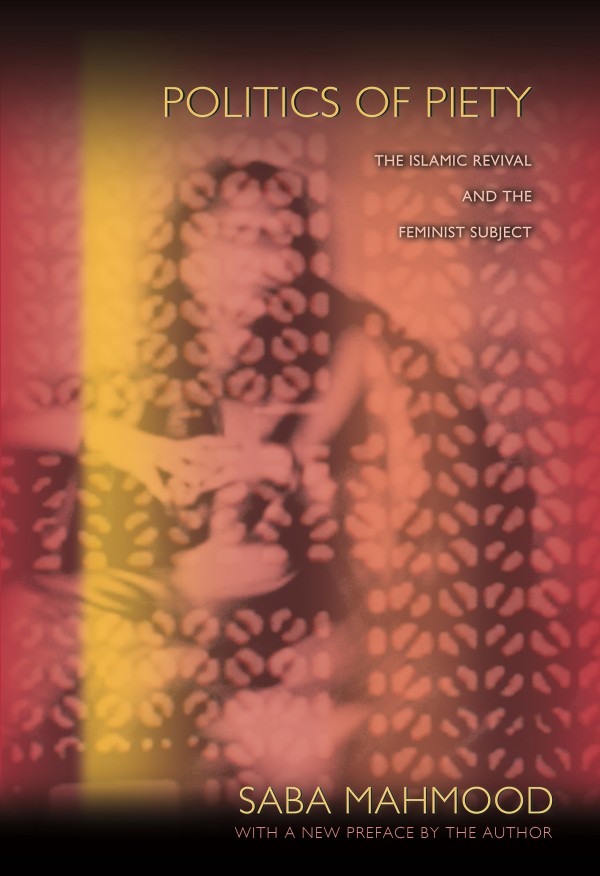
Book Review: Politics of Piety / Saba Mahmood
Mahmood, S. (2012). Politics of piety: the islamic revival and the feminist subject. Princeton: Princeton University Press. This thought-provoking yet complicated book is a groundbreaking analysis of the complex relationship between religious practices and beliefs of (some) Muslim women and modern secular liberal discourses on feminism and other issues. The ethnography, published in 2004 by... Continue Reading →
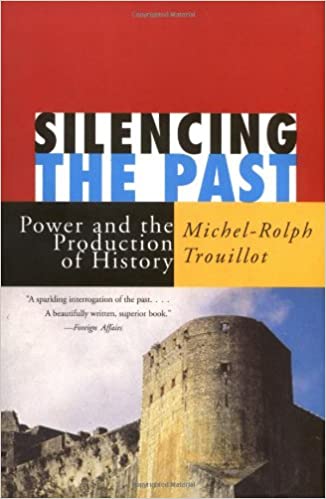
Book Summary: Silencing the Past / Michel-Rolph Trouillot
Chapter 1: The Power in the Story Trouillot mentions how we participate in history both as actors and narrators. For him, history means both 'what happened' and 'what is said to have happened'. The former suggests the sociohistorical process, while the latter speaks about our knowledge of that process. He further mentions how there are... Continue Reading →
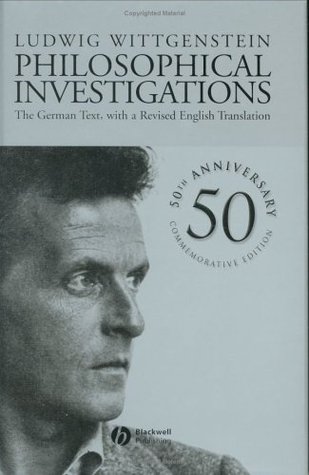
Philosophical Investigations / Ludwig Wittgenstein
To imagine a language means to imagine a life-form.We mind about the kind of expressions we use concerning these things; we do not understand them, however, but misinterpret them. When we do philosophy we are like savages, primitive people, who hear the expressions of civilized men, put a false interpretation on them, and then draw... Continue Reading →
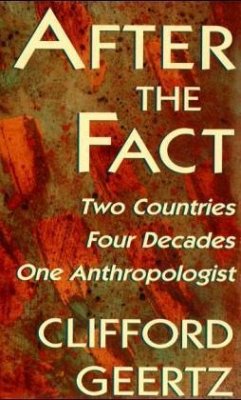
After the Fact: Two Countries, Four Decades, One Anthropologist / Clifford Geertz
The nervousness about speaking for others grows out of the introspections induced in anthropologists by the massive decolonization after the Second World War. That most of the classic field studies were carried out in colonial or semi-colonial settings, settings in which being white and Western conferred in itself a certain privilege and involved, willy-nilly, a... Continue Reading →
Book Review: Political Leadership among Swat Pathans / Fredrik Barth
Barth, Fredrik. Political Leadership among Swat Pathans. 1st Pbk. Ed. with Corrections ed. London: Athlone, 1965. Print. Monographs on Social Anthropology ; No. 19. This fascinating yet terrifyingly complex ethnography, published in 1959, is about the Pashto-speaking people (Pathans) of the Pakistan-Afghanistan border area called Swat. Fredrik Barth claims the main purpose of his study... Continue Reading →
Is Critique Secular?: Blasphemy, Injury, and Free Speech / Talal Asad, Wendy Brown, Judith Butler, Saba Mahmood
The recent European discourse on blasphemy as applied to the behavior of Muslim immigrants in Europe serves, paradoxically, at once to confirm and to deny difference. Angry Muslim responses to the publication of the Danish cartoons are seen by secularists as attempting to reintroduce a category that was once a mea ms of oppression in... Continue Reading →